Throughout the world, there has always been discrimination against women in countries and churches. This was very true during the time of Jesus. His teaching and practice were very counter-cultural in this regard. Many of his close followers were women (Lk. 8:1–3); he disregarded the laws forbidding men’s interaction with women in public (Jn. 4:28, Lk. 7:36–50). His Kingdom was an inclusive Kingdom (all are included), unlike the worldly kingdoms of the time, which were very exclusive (Mt. 22:8–11). And the first witnesses of his resurrection were women. In Jewish legal proceedings, a woman’s witness (or evidence) was not regarded as reliable, and a man would have to speak on her behalf.
Thankfully, this prejudice has been abandoned in many countries and cultures. Also, in the Catholic Church, efforts have been made (especially under Pope Francis) to elevate women to higher positions and to recognise their huge contribution to life in the Church.
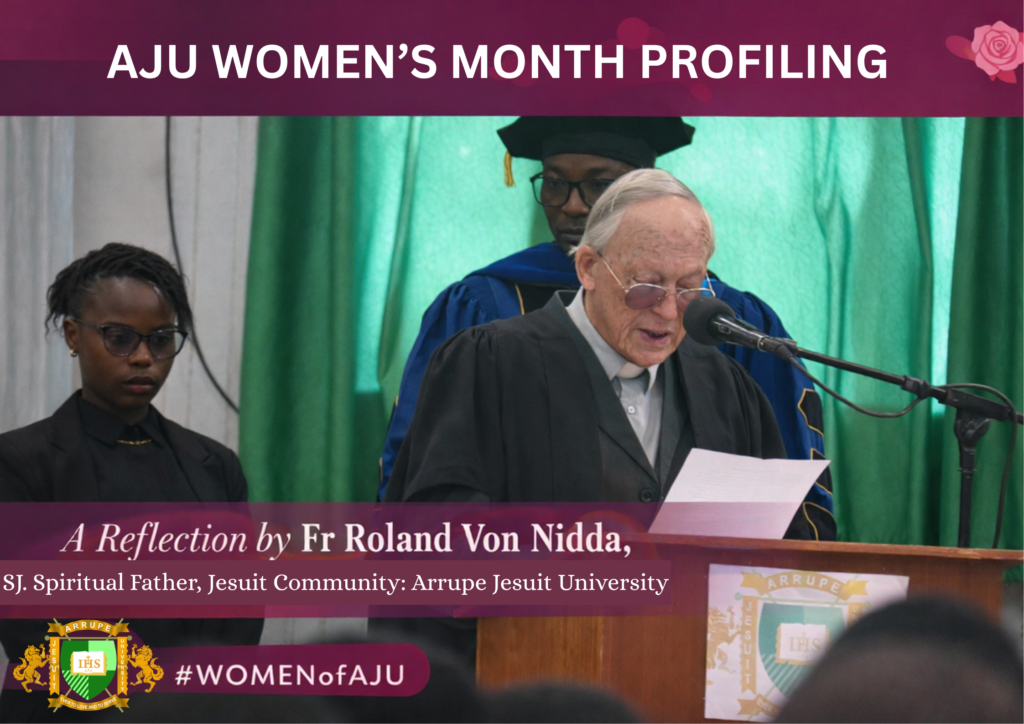
It is, therefore, with great delight that I can say the same has been happening at Arrupe Jesuit University over its history. It began in 1990 at St. Anne’s Hospital as Arrupe House. Here, it acted as a school of studies for one stage in the formation of Jesuit scholastics. It was thus composed entirely of male students and teachers.
In 1994, it moved to its present location and became Arrupe College, under the auspices of the University of Zimbabwe. Its staff and student population expanded a little, mostly comprising male students from other religious congregations. Again, there were very few females at the College.
In 2017, it was approved by ZIMCHE as a university and became Arrupe Jesuit University. In its short existence as a university, there have been remarkable developments. The number of courses and degrees it offers has shot up, under four main Schools (Philosophy and Humanities, Education and Leadership, ICT and Engineering, Business Management and Development). The student population has risen from about 150 to about 1,000, over 40% of whom are women. Its lecturing staff has risen to 86, of whom 28% are women. Its administrative staff comprises 43, and 26% are women.
This is a very pleasing development and is in keeping with both the Catholic Church’s and Jesuit social teaching.
Catholic social teaching (CST) asserts that men and women possess equal dignity and are created by God to be complementary rather than identical. Women are called to be active agents in society and the Church, exercising a “feminine genius” for nurturing life and fostering care, alongside calls for greater participation in leadership and decision-making roles.
Greater inclusion of women was a priority of Pope Francis’s pontificate. He has taken practical steps in appointing women within the Vatican and called for a “deeper theology of women.”
A truly synodal Church requires the authentic voices of women to be heard and integrated into collective discernment. In 2021, Father General Arturo Sosa, SJ, established the Commission on the Role and Responsibilities of Women in the Society of Jesus to ensure that women’s voices are more deeply engaged in shaping Jesuit mission. The final report was completed last year and was presented to Father General in the third quarter of 2025.
So, Arrupe Jesuit University is leading the way in these Church and Jesuit endeavours. Welcome, ladies, to Arrupe. It is good to see the profiling of Arrupe women this Women’s Month. Congratulations on the work you do, and continue with it in our mission to make Arrupe and Zimbabwe great again.